How to Stop Enabling an Adult Child Financially
The short answer
Parent who keeps paying for an adult child who drinks or uses: you do not have to choose between "keep paying for everything" and "cut them off." The middle path is to stop paying for anything that keeps the addiction comfortable, while still paying for, or helping with, anything that moves them toward recovery. Do it on a written, dated plan, together with your partner, and tell your child before it starts, not in the middle of a fight.
Why money is the hardest boundary
Money feels like love, and it feels like safety. Many parents keep paying because they are afraid of what happens if they stop: eviction, a car repossessed, their child on the street. That fear is real and deserves respect. But cash and covered bills often free up other money for drinking or using, and they remove the consequences that might help your child see the problem. Paying is not wrong. Paying without a plan usually is.
Sort every payment into three columns
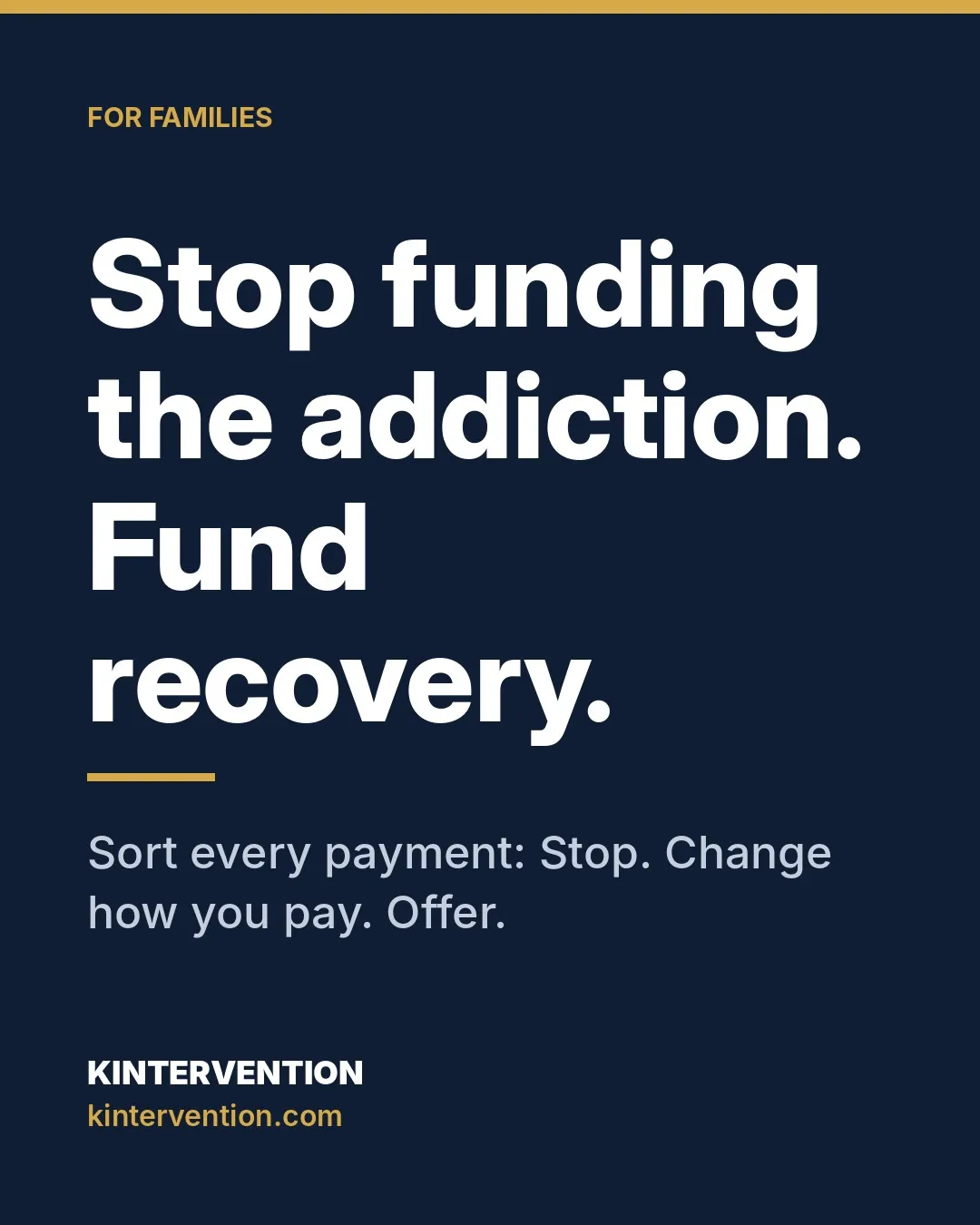
Stop. Cash, money "for groceries" that arrives as cash, paying off debts from using, bailing out late fees, replacing things that were sold or lost.
Change how you pay. Things you are willing to keep covering for a while, but paid directly to the provider: a phone bill, health insurance, a co-pay. No money passes through your child's hands.
Offer. Things you will gladly pay for that support recovery: treatment, a counselor, a recovery coach, rides to appointments, a sober living deposit.
Make the change on a schedule
Sudden, angry cutoffs tend to create a crisis and a reconciliation, and then the old pattern returns. A plan with dates holds better:
Write down what is changing and the date it starts.
Give notice. Thirty days is common for rent or major bills, so your child can plan.
Put the offer next to the boundary: "We will not keep paying your rent. We will pay for treatment the day you're ready."
Agree with your partner that neither of you will make exceptions privately. Secret side payments undo the whole plan.
What to say
Keep it short and calm, at a sober moment: "We love you, and we've been paying for things in a way that isn't helping you. Starting on the first, we won't be sending cash or paying your rent. We will pay your phone bill directly through March. And if you decide to get help, we will pay for treatment and drive you. That offer doesn't expire."
Then stop. Do not defend each line. Expect anger, guilt, or a crisis story. You can respond with "I hear you. The plan stays the same. The offer stays open."
Quick win for today
Open your bank app and list every payment that went to or for your child in the last 60 days. Put each one in Stop, Change, or Offer. Most parents are surprised by the total and by how much of it was cash.
An example
An illustration, not a real family: parents have been paying their 26-year-old daughter's rent, car insurance, and "a little extra" each week. They sort it into columns. The weekly cash stops. The car insurance gets paid directly for two more months. The rent ends in 30 days. Next to all of it they write one offer: treatment, fully covered. The first weeks are painful. Their daughter says they don't love her. They hold the plan, and they repeat the offer every time they talk.
Fix Card: Money boundary
Baseline (write it down before you start): List what you paid for your adult child last month. What's the total?
Done-right checklist (yes or no):
Every payment listed
Each marked: basic safety, or funds their use
One payment chosen to change
Told them in advance, calmly, with a date
Evidence: Your list and the date you told them.
Recheck date: 7 days after you start.
Pass mark: One payment changed, held for 30 days. If not, check: did you give notice in advance, and did everyone paying agree?
Your light: Red: not looked at. Yellow: list made. Green: one change held.
Report it: Log your result and set your light
Not sure where your family stands? Take the 2-minute Clarity Check.
If someone is in immediate danger or overdosing, call 911. For suicidal thoughts, call or text 988. SAMHSA helpline: 1-800-662-4357.
Safety matters
If your child threatens self-harm when money stops, take it seriously every time: call or text 988, or call 911 if they are in immediate danger. A safety concern is a reason to get professional help into the plan, not a reason to drop it.
Not sure which payments are helping and which are enabling? Take the free KINTERVENTION Clarity Check. It takes a few minutes and helps you see where your family stands.
If this is an emergency: if someone is in immediate danger or may be overdosing, call 911 now. For thoughts of suicide, call or text 988. For free, confidential treatment referrals any time, call the SAMHSA National Helpline at 1-800-662-4357. This article is general information from a professional interventionist, not medical, clinical or legal advice.
You've tried everything. Now try a professional.
If you are ready to stop paying for the addiction and start paying for recovery, let's build that plan together. A first call is confidential and there is no pressure to decide anything on it. You can also call Michael directly at (708) 960-8353.
Book a confidential call with Michael
Send this to your spouse or your child's other parent before the next request for money comes in.
