What to Say to Someone With a Drinking or Drug Problem
The short answer
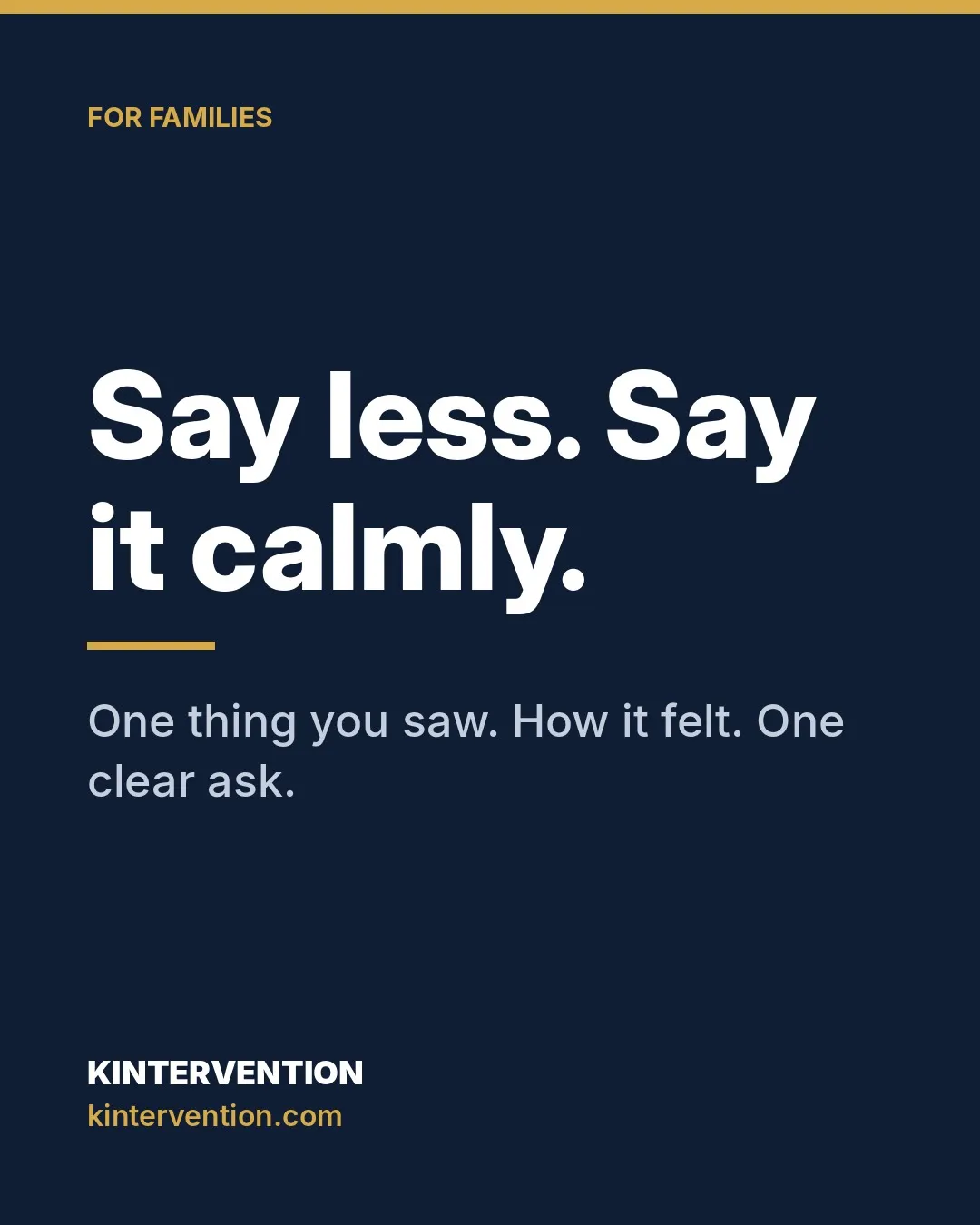
Spouse, parent, or sibling about to have "the talk": say less, say it calmly, and make it specific. One observed fact, one feeling, one clear request. The goal of a single conversation is not to win an argument. It is to be heard without shutting the door.
Before you say anything
Pick the moment. Not while they are drinking or high. Not in the middle of a fight. Not in front of kids.
Pick one thing. One recent, specific event beats a list of everything from the past ten years.
Decide your ask in advance. "Will you see a doctor?" "Will you talk to someone with me?" Know what you are asking for.
Scripts you can use
Opening
"I love you, and I want to talk about something that's been worrying me. Can you give me five minutes without us arguing?"
Naming what you saw
"Saturday night you didn't remember driving home. I was scared. I'm not saying this to blame you. I'm saying it because I don't want to lose you."
The ask
"Would you be willing to talk to a professional with me this week? I'll make the call and I'll come with you."
When they say "I don't have a problem"
"You don't have to agree with me today. I just need you to know what I'm seeing, and that help is there whenever you want it."
When they get angry
"I'm not trying to fight. I'm going to stop for now. I love you and we'll talk again." Then actually stop.
When they promise to cut back
"I hope that's true. If it turns out to be harder than you think, will you agree to get help then?" Now there is a next step on the table, not just a promise.
What not to say
Labels: "You're a drunk." "You're an addict." Labels start a debate about the word instead of the problem.
Threats you won't keep: "This is your last chance" said for the fifth time teaches them it isn't.
Comparisons: "Your brother never did this." Shame shuts people down.
Long histories: the more you list, the more they defend.
Quick win for today
Write your three sentences now, before you need them: one specific thing you saw, how it made you feel, and your one ask. Read them out loud twice. When the moment comes, you will be calmer, because you won't be inventing it on the spot.
An example
An illustration, not a real family: a mother has tried to talk to her son a dozen times, and every time it turns into a fight about his friends, his job, and old arguments. This time she uses three sentences. "Last week you missed your daughter's recital and didn't call. I was heartbroken for both of you. Will you meet with someone with me on Thursday?" He still says no. But for the first time, the conversation ends without shouting, and the door stays open.
When one conversation isn't enough
If you have had the talk many times and nothing changes, the problem is usually not your words. It is that one person, alone, is asking someone to change something that feels impossible to them. That is where a planned family conversation, with everyone saying the same thing, and a professional guiding it, makes a difference.
My own family said all the right things to me for years. What finally changed things around age 40 was a professional intervention with an actual plan behind it. I'm in long-term recovery now, and helping families find the right words, and the right plan, is my work.
If this is an emergency: if someone is in immediate danger or may be overdosing, call 911 now. For thoughts of suicide, call or text 988. For free, confidential treatment referrals any time, call the SAMHSA National Helpline at 1-800-662-4357. This article is general information from a professional interventionist, not medical, clinical or legal advice.
Fix Card: One calm conversation
Baseline (write it down before you start): Think of your last talk about their drinking or use. Did it end in an argument? Yes or no.
Done-right checklist (yes or no):
Picked a sober, calm moment
Used "I" statements and one specific example
Said what you love about them
Stopped after one ask, without lecturing
Evidence: A short note right after: what you said, how they reacted.
Recheck date: 7 days after you start.
Pass mark: A conversation that ends without a fight, even if they say no. If not, check: was it a calm moment, and did you keep it short?
Your light: Red: still arguing. Yellow: script written. Green: one calm conversation held.
Report it: Log your result and set your light
Not sure where your family stands? Take the 2-minute Clarity Check.
If someone is in immediate danger or overdosing, call 911. For suicidal thoughts, call or text 988. SAMHSA helpline: 1-800-662-4357.
You've tried everything. Now try a professional.
If you have said everything you know how to say, let's talk about what comes next. A first call is confidential and there is no pressure to decide anything on it. You can also call Michael directly at (708) 960-8353.
Book a confidential call with Michael
Know someone carrying this alone? Send this to the person in your family who is about to have "the talk," so you're both using the same words.
