How to Handle the Holidays With an Addicted Family Member
The short answer
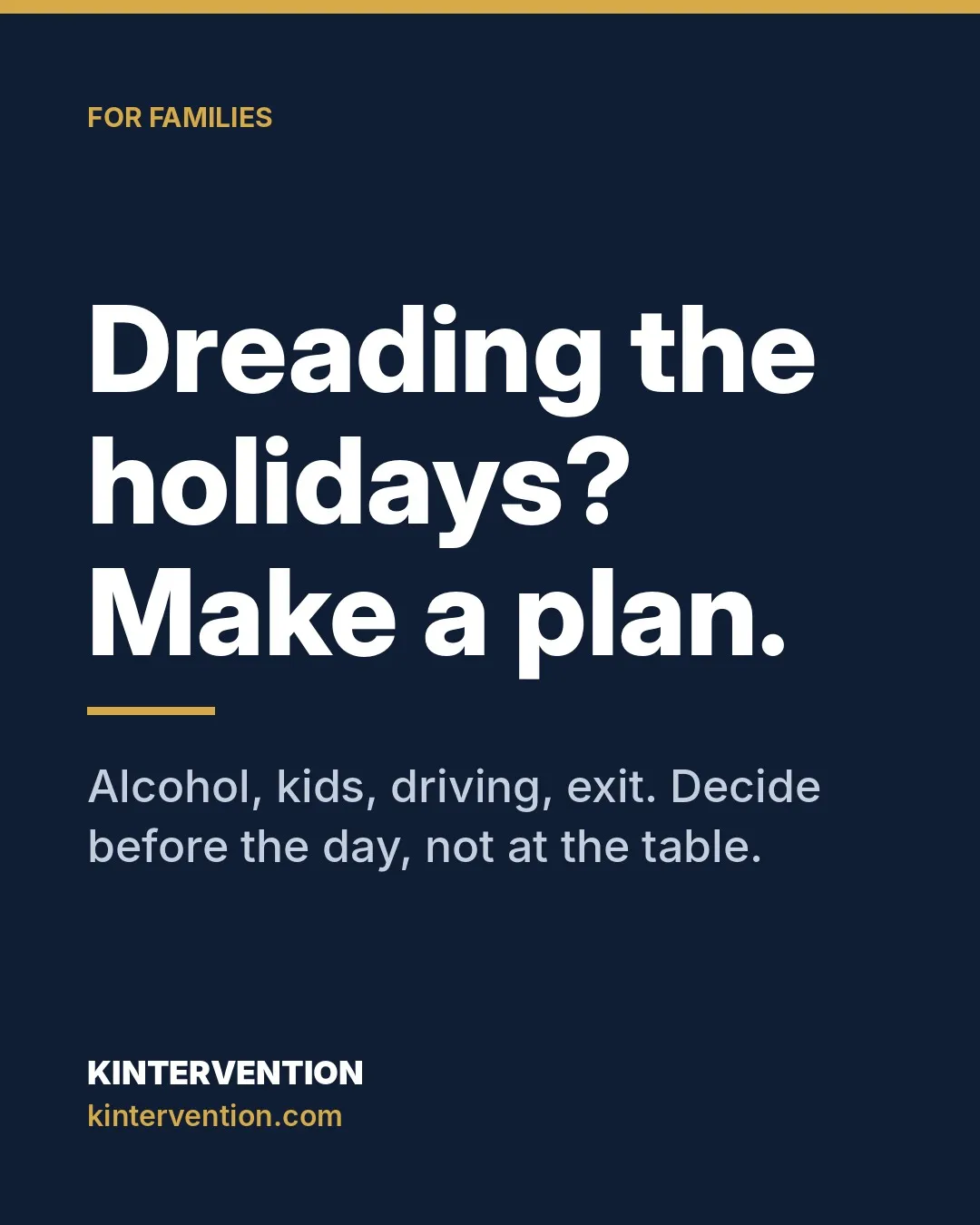
Parent, spouse, or sibling already dreading the holidays: you can't control whether your loved one drinks or uses at Thanksgiving or Christmas. You can control your plan. The families who get through the holidays best decide ahead of time what they will allow, what they will say, how they will protect the kids, and when they will leave. Then they stick to it calmly, without a scene at the table.
Don't confront at the dinner table
The holiday meal is one of the worst places to raise someone's drinking or drug use. Emotions are high, there is an audience, and alcohol is often present. If a serious conversation needs to happen, plan it for a separate, calm time with the right people.
A simple holiday plan
Agree as a family first. Before the day, decide together: will alcohol be served? What happens if your loved one arrives impaired? Who will step in?
Set the format. A shorter gathering, a brunch instead of a long evening, or an alcohol-free event can lower the risk.
Protect the kids. Decide who is watching them, and that no child rides with anyone who has been drinking or using.
Drive separately. Give yourself a way to leave.
Decide your exit line. Know in advance what will make you go, and what you'll say.
Plan for driving. If someone is impaired, take the keys if you safely can, offer a ride, or call 911 if they are on the road.
Scripts for hard moments
When they arrive impaired
"I'm glad to see you. Today isn't going to work like this. Let's get you home safely, and I'll call you tomorrow."
When a relative starts a confrontation at the table
"This matters, and today isn't the time. Can we talk about it this weekend?"
When you leave
"We're heading out. I love you. Happy Thanksgiving." No explanation needed.
If your loved one is in recovery
The holidays can be hard for someone early in recovery. Ask them what would help, rather than guessing. Some people want an alcohol-free gathering, a role to play, or permission to leave early to get to a meeting. Offer non-alcoholic drinks without making a show of it.
Take care of yourself
Lower your expectations for the "perfect" holiday. Keep part of the season for people and traditions that give you rest. Many Al-Anon and Nar-Anon groups hold extra meetings around the holidays.
Quick win for today
Text the key family members one question: "Can we agree on a plan for the holidays before the day?" Then schedule a 20-minute call to settle the five decisions above: alcohol, format, kids, driving, and exit.
An example
An illustration, not a real family: every year, Thanksgiving ends with the same argument between a father and his adult son, who arrives after drinking. This year the family switches to an early afternoon meal without alcohol, the mother drives separately, and the son's sister agrees to handle it if he shows up impaired. He arrives having had a few drinks. She uses her line, drives him home, and the meal goes on. The next week, the family meets to talk about getting professional help, using what they saw as clear, specific information instead of another argument.
Fix Card: Holiday plan
Baseline (write it down before you start): At last year's holiday gatherings, how many moments were tense because of drinking or use? Write the number.
Done-right checklist (yes or no):
Arrival and leaving times decided in advance
A plan for the kids if things get tense
Your own exit script written
Hosts told only what they need to know
Evidence: Your written holiday plan.
Recheck date: 7 days after you start.
Pass mark: You leave on your plan, not in the middle of a scene. If not, check: did you drive yourself, and did you decide your exit time in advance?
Your light: Red: no plan. Yellow: plan written. Green: plan used at a gathering.
Report it: Log your result and set your light
Not sure where your family stands? Take the 2-minute Clarity Check.
If someone is in immediate danger or overdosing, call 911. For suicidal thoughts, call or text 988. SAMHSA helpline: 1-800-662-4357.
Use what the holidays show you
Holidays bring the family together and make the problem hard to ignore. That makes them a good time to start planning, even though they are a bad time to confront. If you leave this season knowing something has to change, write down what you saw and talk to a professional in January, or sooner.
Leaving the holidays wondering how serious things really are? Take the free KINTERVENTION Clarity Check. It takes a few minutes, and it helps you see where your family stands before you decide anything.
If this is an emergency: if someone is in immediate danger or may be overdosing, call 911 now. For thoughts of suicide, call or text 988. For free, confidential treatment referrals any time, call the SAMHSA National Helpline at 1-800-662-4357. This article is general information from a professional interventionist, not medical, clinical or legal advice.
You've tried everything. Now try a professional.
If the holidays are making it clear your family needs a real plan, let's talk before the next gathering. A first call is confidential and there is no pressure to decide anything on it. You can also call Michael directly at (708) 960-8353.
Book a confidential call with Michael
Send this to the family members you'll see at the holiday table, so you can agree on a plan before the day.
